Gutter replacement in London
Renewal for guttering that is too badly damaged or worn to retain, with attention to how each run connects and drains.
- Identify the damaged length and suitable points to join the retained gutter.
- Check the visible support and where a replacement section would discharge.
- Determine which connections need renewal along with the damaged channel.
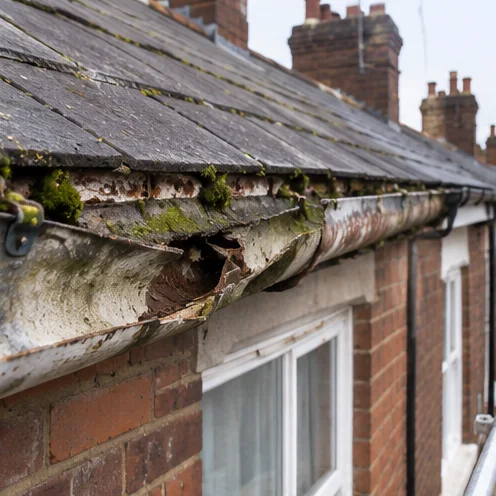
What to tell us about the problem
| What you’ve noticed | What we need to establish |
|---|---|
| Split channel | Identify the damaged length and suitable points to join the retained gutter. |
| Distorted run | Check the visible support and where a replacement section would discharge. |
| Unusable fittings | Determine which connections need renewal along with the damaged channel. |
| Old gutter meeting retained pipework | Review the condition and position of the retained pipe before proposing a connection. |
| Damage across several sections | Map the affected sections so you know where any renewal would begin and end. |
| Unclear drainage route | Identify outlets and roof levels before agreeing which lengths to replace. |
Decide where the new work begins and ends
One damaged length does not automatically establish that the whole roofline needs renewal. We look at the condition of adjoining sections and whether they provide a sensible connection point for the proposed work. If the roof has a separate bay gutter or rear extension, identify which of those runs has failed so it can be considered in its own right.
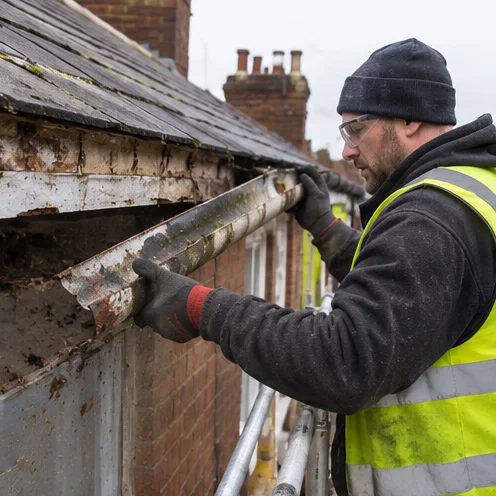
Assess the support at the roof edge
Before discussing a replacement we look at the line of the gutter, the condition of its supports and what is visible around the roof edge. New guttering needs a suitable fixing position. If the surrounding area appears damaged, we identify the issue before treating the gutter as an isolated job. That helps you understand which parts need further assessment.
- Boundary and position of the join with retained guttering
- Separate bay outlet and condition of the support
- How the roof elevations connect to existing rainwater pipes
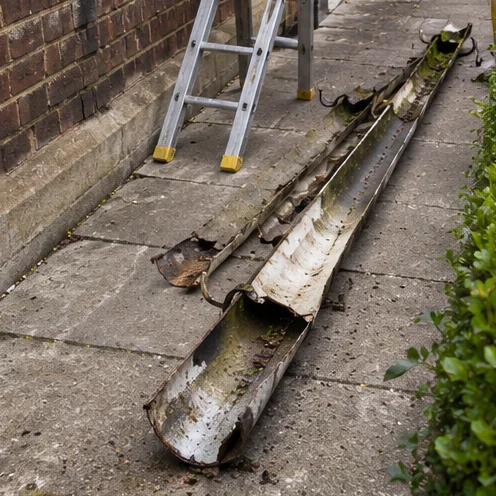
Plan the rainwater route
The outlets and downpipes determine where the new gutter needs to discharge. We discuss the position of existing pipes and whether they can be retained. On a house with a bay, rear addition or more than one roof level, there may be separate runs that discharge at different points. We look at those connections before agreeing which fittings are involved.
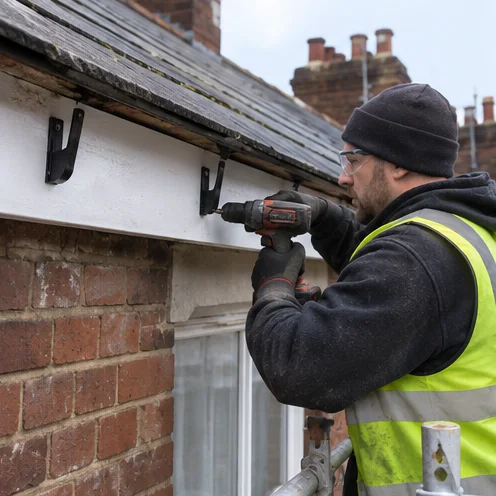
Discuss removal and access
Taking away a damaged run and bringing replacement lengths to the roof edge require a workable route. Tell us if access is via a narrow side passage, a shared driveway or a commercial yard with restricted hours. If the gutter runs across a boundary, identify the part you control. We can then discuss the practical extent of the work.
Check the connection with retained fittings
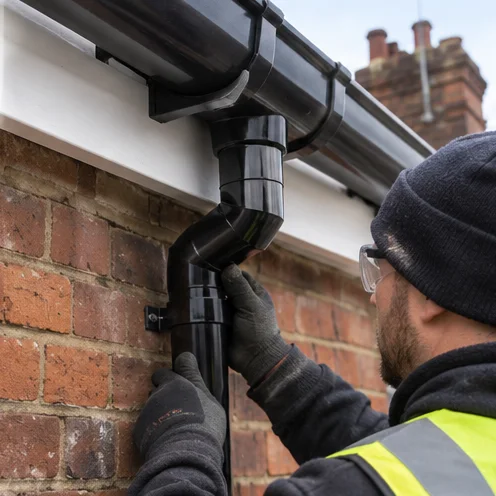
When part of an older system remains, the junction with the replacement section needs attention. We look at the shape and position of the existing gutter and the accessible pipework. If retaining one fitting would leave an unreliable connection, we explain the issue so it can be considered before the work goes ahead.
Handover after renewal
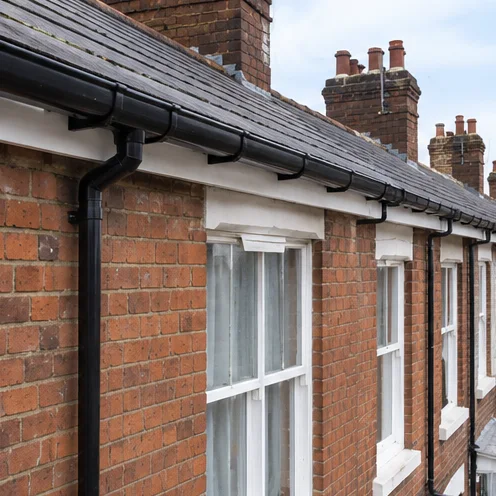
We tell you which runs and outlets were included and explain any part of the existing system that was retained. A separate outlet, older bay gutter or neighbouring run can still need attention later. Knowing where the replacement ends makes it easier to identify those sections if you report a different problem in future.
Access and property details
| Property or site | What helps us prepare |
|---|---|
| Terrace with shared roofline | Boundary and position of the join with retained guttering |
| House with separate bay gutter | Separate bay outlet and condition of the support |
| Commercial premises with several outlets | How the roof elevations connect to existing rainwater pipes |
What affects the work at your property
Map the old gutter before agreeing the new run
The main roof, a bay and a rear addition can each drain independently. We identify which parts you want to renew and what will stay in place. It helps to explain where overflows or leaks occur and whether the problems began after another part of the property was altered. The existing position of an outlet is useful, but the way it connects to a downpipe matters just as much when discussing the proposed replacement.
Account for corners and joining points
A straight length of gutter is only part of a rainwater run. Corners, outlets and end fittings determine how adjoining sections work together. We consider these points alongside the length of channel that appears damaged. If the proposed work ends next to a shared section or a different gutter profile, we discuss that connection before agreeing the job. A boundary that looks straightforward at ground level can be more complicated at the roof edge.
Check what sits below the proposed work
Tell us if the gutter is above a conservatory, a shop canopy or an entrance that needs to stay in use. A long piece of gutter needs room to be brought to the working area, and the old run needs to be removed from the same elevation. We discuss those practical constraints in advance. At a commercial property, a named contact can help identify a suitable time and access route for the affected section.
Discuss the condition of parts you want to retain
A downpipe may be in better condition than the gutter above it, or the pipe connection may itself be part of the problem. We look at the accessible fittings and discuss where they connect. If an old fitting is loose or damaged, we explain why its condition matters to the new run. The work can then be considered with a clear idea of which pieces will be retained and which need further attention.
Check which areas will still need maintenance
A replacement deals with the sections included in the work. Nearby channels can continue to collect debris, particularly where trees overhang a different elevation. We identify the parts that were renewed and note any accessible adjacent areas you asked us to look at. If an old outlet or separate gutter was outside the work, we can explain which part to refer to if a fault is reported there later.
When the old run has several outlets
Tell us if one part regularly floods while another appears to drain normally. We can consider whether the proposed renewal needs to cover the entire length or just the part serving the affected outlet. If a pipe is to remain, its position and the condition of the existing connection matter to that decision. We also discuss how the new section will meet the roof edge at both ends.
Questions about gutter replacement
Can the existing downpipes stay?
We assess their condition and position in relation to the proposed outlets. Retaining a pipe may make sense if it provides a suitable connection and discharge route. We discuss the parts that would remain before agreeing work.
What if only one elevation is worn out?
We consider the affected elevation on its own and look at where it meets the remaining guttering. If the join is sound and practical, the rest of the system can be considered separately.
Can a small bay gutter be renewed on its own?
Often it has a separate outlet and support arrangement. Tell us where it discharges and what is directly below it. We assess that roof edge and its connection before discussing a replacement.
What happens at a shared boundary?
Identify where your responsibility ends and who can provide any necessary access. We look at the connection with the retained guttering and discuss which fittings fall within the proposed work.
Will a new gutter solve standing water?
The answer depends on why the water is standing. We assess the existing support, line and discharge point so the proposed work can address the visible cause rather than simply renew the channel.
Can we discuss replacement after a repair assessment?
Yes. If the inspection finds widespread damage or unsuitable fittings, we can explain which sections would be considered for renewal and which might remain in use.
Arrange an assessment
Tell us about split channel or describe the part of the building that needs attention. See where we work or speak to us on +44 20 3746 8156.